
The restaurant industry loves big ideas. Giant menus. Overbuilt concepts. Fancy ordering systems. Owners often think that more options will attract more people.
Usually, the opposite happens.
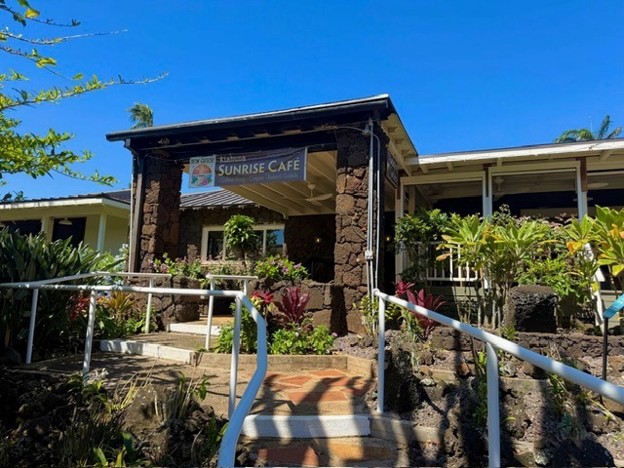
The restaurants that last tend to focus on simple things done well. That idea sits at the center of Kiahuna Sunrise Cafe Hawaii, the breakfast-and-brunch concept founded by hospitality operators Kirk and Paula Coult in Poʻipū, Kauaʻi.
Their cafe is located in a restored plantation-era building at Kiahuna Plantation. The focus is straightforward: breakfast, coffee, pastries, and a relaxed morning experience in a garden setting.
That simplicity is intentional.
“We’ve learned over time that guests usually want the same thing,” Kirk says. “They want good food, fast enough service, a clean space, and something that feels easy. Once you overload the experience, people feel it immediately.”
That lesson matters because the restaurant industry remains one of the toughest businesses in America. According to the National Restaurant Association, roughly 30% of restaurants fail within their first year. By year five, about half are gone.
Complexity is often part of the problem.
Why Smaller Menus Usually Work Better
Many restaurant owners believe bigger menus increase sales. Research shows the opposite can happen.
A study published in the Journal of Hospitality Management found that oversized menus often slow down kitchen operations, increase food waste, and overwhelm customers. Restaurants with tighter menus typically move faster and operate more consistently.
Kiahuna Sunrise Cafe Hawaii follows that model closely. The menu focuses on breakfast and brunch staples like omelets, crepes, pancakes, loco moco, eggs Benedict, and chicken and waffles.
Nothing feels random.
“We once had a menu years ago that looked like a phone book,” Kirk says with a laugh. “We thought more options meant happier customers. What we got instead was slower ticket times and stressed-out cooks.”
He remembers watching servers spend extra time explaining complicated dishes while the kitchen scrambled to keep pace.
“That experience changed how we think,” he says. “Now we ask one question: does this item actually make the experience better?”
If the answer is no, it does not stay.
Customers Notice Simplicity Faster Than Owners Do
Restaurant owners often obsess over features customers barely notice. Guests usually care about speed, consistency, and comfort.
That sounds obvious. It still gets ignored constantly.
A recent Toast restaurant trends report found that 79% of diners value consistency more than novelty when choosing where to eat regularly. Another survey found that wait times are one of the top reasons customers do not return to restaurants.
Simple operations help solve both problems.
At Kiahuna Sunrise Cafe Hawaii, the setup supports both sit-down dining and quick takeout. The coffee station moves efficiently. The menu avoids unnecessary overlap. The service flow matches the area’s morning pace.
“The busiest moment for us is usually early morning,” Kirk explains. “People are heading to the beach, golf, hiking, and snorkeling. Nobody wants to wait 40 minutes for breakfast before they start their day.”
That shaped how the cafe operates from the beginning.
Simple Restaurants Are Easier to Train
Staff turnover continues to hit restaurants hard. The U.S. Bureau of Labor Statistics regularly ranks hospitality among the industries with the highest turnover rates in the country.
Complex restaurants make this worse.
Large menus require more training. Complicated systems create more mistakes. Confusing workflows slow down new employees.
Simple operations are easier to teach and easier to repeat.
The team at Kiahuna Sunrise Cafe Hawaii focuses heavily on consistency during busy mornings. That means clear prep systems, fewer unnecessary steps, and menu items the kitchen can execute repeatedly under pressure.
“Every restaurant owner has experienced the panic moment where three people call out, and suddenly the whole machine feels shaky,” Kirk says. “Simple systems hold together better when real life happens.”
That matters more than flashy ideas.
The Best Restaurant Concepts Usually Fit Their Location
One major mistake in hospitality is forcing concepts into places where they do not belong.
The Coult approach works differently. Their cafe was shaped around the location first.
Kauaʻi influenced nearly every part of Kiahuna Sunrise Cafe Hawaii. The garden lanai seating. The early opening hours. The relaxed atmosphere. Even the decision to emphasize coffee and breakfast reflects how mornings work in Poʻipū.
“Kauaʻi mornings have their own rhythm,” Kirk says. “People wake up early here. They want coffee, sunlight, something familiar, and they want to get on with their day.”
That understanding matters because customer behavior changes by market. What works in one location may fail completely somewhere else.
Simple concepts adapt better because they stay flexible.
Why Overdesigned Restaurants Often Burn Out
The restaurant business has a habit of chasing trends too aggressively. One year, it is giant menus. The next year, it is a theatrical presentation. Then it becomes gimmick-heavy dining experiences.
Some trends work briefly. Few last.
Consumers eventually return to places that feel dependable.
That shift became even more noticeable after 2020. Research from Square found that customers increasingly prioritize comfort, convenience, and familiarity when dining out.
That trend helped reinforce the philosophy behind Kiahuna Sunrise Cafe Hawaii.
“At some point, people just want places that feel human,” Kirk says. “Not every breakfast needs fireworks attached to it.”
That line gets a laugh from regular customers. It also captures something important happening across hospitality right now.
Restaurants are rediscovering the value of restraint.
Simplicity Does Not Mean Boring
Simple restaurants still require creativity. The difference is where the creativity gets used.
Instead of building giant menus or confusing concepts, strong operators focus creativity on experience, flow, atmosphere, and consistency.
At Kiahuna Sunrise Cafe Hawaii, small details shape the experience. Locally roasted coffee. Garden views. Quick service. Familiar food done properly. A building with history.
None of those ideas screams for attention individually.
Together, they work.
That may be the biggest lesson in the entire restaurant industry right now.
Simple concepts are often harder to build because they leave less room to hide mistakes.
If the menu is focused, the food has to be good. If the operation is streamlined, timing has to work. If the atmosphere is relaxed, the service has to match it.
There is nowhere to hide behind gimmicks.
“We’re not trying to impress people with complexity,” Kirk says. “We’re trying to create a morning people actually want to repeat.”
That mindset may sound modest. In today’s restaurant industry, it is becoming one of the smartest strategies around.
→ For deeper coverage, head to our full archive.
There is no ads to display, Please add some