

Table of Contents
- Understanding Marketing Attribution
- The Role of Call Tracking in Attribution
- Benefits of Advanced Call Tracking
- Integrating Call Tracking with Other Tools
- Implementing Call Tracking in Your Strategy
- Challenges and Considerations
- Conclusion
Understanding Marketing Attribution
In today’s multi-channel marketing landscape, tracking the precise impact of each campaign is essential for optimizing your marketing budget and driving successful outcomes. Marketing attribution seeks to identify which touchpoints along the customer journey directly influence sales, conversions, and other key actions. Marketers are constantly challenged by the proliferation of platforms—such as social media, search engines, email, and offline channels—each driving interactions in distinct ways. Regardless of how sophisticated a business’s campaigns may be, aligning these efforts with measurable results is challenging without accurate and comprehensive data. Marketers need actionable insights not only to understand which channels perform best but also to sequentially optimize tactics that move customers from initial awareness to final conversion.
This is where call tracking software becomes indispensable. As more customers engage with brands both online and offline, call tracking software bridges the gap between digital touchpoints and real-world conversations. By linking phone inquiries to specific campaigns, businesses finally gain visibility into which marketing assets actually drive inbound calls and, ultimately, revenue. Unlike basic call logging methods, contemporary solutions provide granular tracking, mapping every phone engagement back to the marketing source with pinpoint precision. This enables marketers to tie investments directly to real customer actions, improving the accuracy and impact of campaign reporting.
The Role of Call Tracking in Attribution
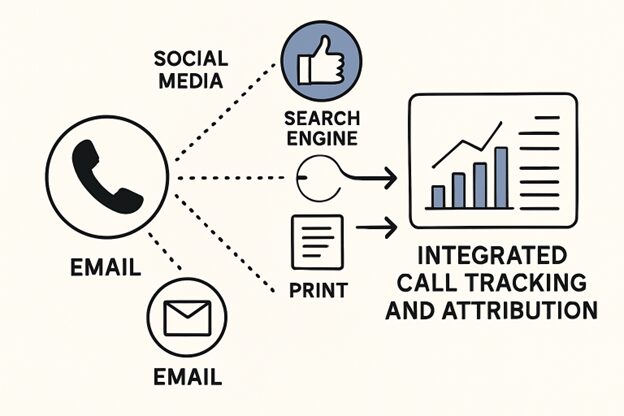
Call tracking goes beyond counting phone calls; it provides in-depth intelligence about caller sources, campaign effectiveness, and customer behavior. For advertisers relying on channels such as Google Ads, social media, or offline promotions, accurately attributing calls is crucial for a comprehensive view of the full-funnel marketing process. Modern solutions assign unique phone numbers to each channel or campaign, capturing detailed interaction data every time a customer picks up the phone. This dynamic number insertion ensures that no matter which path a customer takes, be it a search ad, a social post, or a print advert, their call can be traced to the correct source. As explained in Search Engine Land, this capability enables marketing teams to understand which advertising messages and placements are genuinely effective in sparking action.
With this granular data, marketers can tie each call back to its source, such as a PPC ad, an email campaign, or an organic search listing, offering confidence that reporting reflects reality and budget decisions are based on actual performance. With visibility into which campaigns drive the most engaged calls or achieve the highest conversion rates, organizations can intelligently allocate resources and focus efforts on strategies with proven impact, thereby reducing guesswork and wasted spend.
Benefits of Advanced Call Tracking
- Enhanced Data Accuracy: Instead of relying on rough estimates or broad assumptions, businesses receive exact data on where calls originate. This enables more precise attribution across campaigns, building a clear link between marketing spend and return.
- Improved ROI Measurement: Knowing exactly which marketing efforts generate high-quality calls allows for better allocation of resources, greater budget efficiency, and increased returns on investment. Marketers can confidently justify spending and demonstrate the value of each channel to stakeholders.
- Customer Journey Insights: Tracking interactions across multiple touchpoints—including web, search, and offline media—helps businesses uncover which sequences convert best and where adjustments are most needed. This layered understanding is vital as customer journeys become increasingly nonlinear, and consumer expectations for personalized engagement continue to rise.
Integrating Call Tracking with Other Tools
The value of call tracking multiplies when integrated with broader analytics platforms. Solutions like Google Analytics 4 (GA4) enable businesses to correlate phone call data alongside digital interactions and conversion events for a unified marketing dashboard. These integrations break down data silos, providing comprehensive insight into every part of the customer journey, whether a user starts online and converts over the phone or vice versa. Forward-thinking services, such as 800.com, are introducing seamless integrations, enabling marketers to monitor call metrics directly alongside web analytics for an actionable, real-time view of campaign performance.
By synchronizing call data with web and email analytics, marketers can more effectively attribute conversions and respond more quickly to both opportunities and issues, thereby streamlining workflows and accelerating campaign optimization. Such integrations also reduce manual data handling, minimizing errors and saving staff time, while improving the overall agility of marketing teams.
Implementing Call Tracking in Your Strategy
- Select the Right Software: Look for a solution that offers seamless integration with your marketing stack, including web analytics tools, CRM, and ad platforms. Prioritize providers that offer transparent pricing, reliable support, and advanced security features to match your organization’s unique needs. As highlighted in Search Engine Journal, call tracking is most effective when it aligns with broader marketing strategies, ensuring every customer interaction is measured and optimized for growth.
- Set Up Dynamic Number Insertion: Assign unique tracking numbers to each marketing campaign or channel, ensuring call data can be mapped precisely and free of errors. Test your setup thoroughly to guarantee accurate attribution and check that all landing pages, ads, and print materials use the correct numbers for full coverage.
- Analyze and Adjust: Treat call data as a living metric. Regular reviews help identify trends and user preferences, empowering agile campaign adjustments and continual optimization. Use periodic reporting to share insights with stakeholders and adjust messaging, channel mix, or targeting as customer behaviors evolve.
Challenges and Considerations
Deploying advanced call tracking is not without its challenges. Data privacy and regulatory compliance must be top priorities, as phone interactions often involve sensitive information. It’s crucial to implement robust consent mechanisms and follow security best practices when recording or analyzing calls. For businesses operating internationally, varying regulations such as GDPR or CCPA may dictate how call data is collected, stored, and processed. Another hindrance is ensuring complete and unbiased attribution, particularly when customers interact with a brand across several disconnected channels. Imperfect attribution models can lead to misinformed decisions, so ongoing refinement is necessary. Businesses should continuously refine their attribution models, leveraging insights from both online and offline channels. Making use of first-party data alongside call tracking can also improve reliability and accuracy. Organizations should invest in training and clear communication with both staff and customers to ensure responsible data use as they expand attribution capabilities.
Conclusion
Advanced call tracking software has emerged as an essential technology for gaining clear, actionable insights into marketing attribution. By capturing nuanced data about every customer call and linking those interactions to specific campaigns, businesses can confidently optimize their marketing initiatives, deliver more personalized experiences, and ultimately, boost their bottom line. Leveraging integrations, real-time analytics, and privacy-first strategies assures businesses not only gain more profound marketing clarity but also uphold consumer trust in a data-driven age. The future of marketing attribution will demand ever-greater transparency and accuracy, and businesses that embrace advanced call tracking now will be best positioned to lead in the evolving digital landscape.
→ Explore more insights at PriceofBusiness.com.
There is no ads to display, Please add some



