
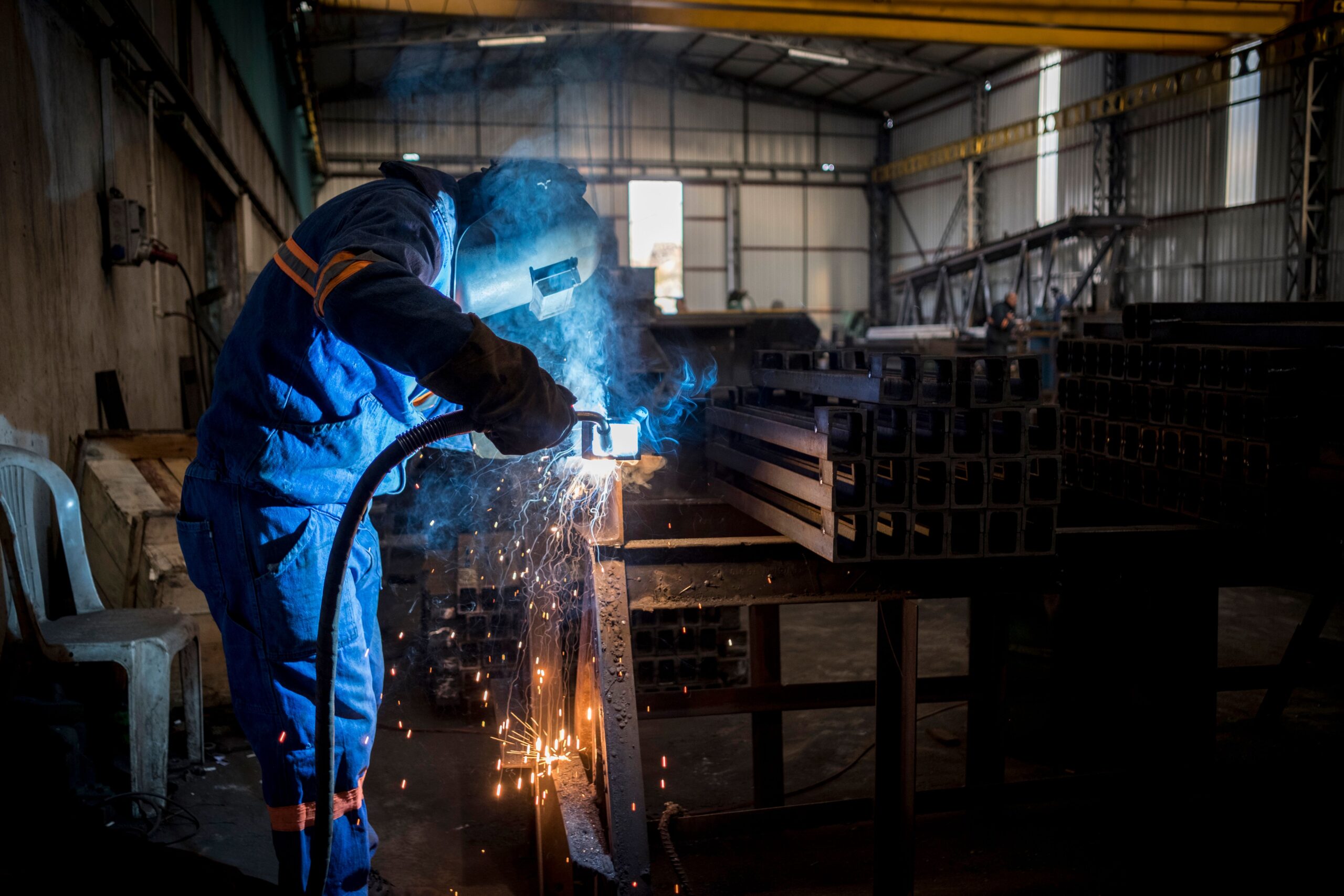

People often think construction is about concrete, steel, and heavy equipment. They picture long days, loud job sites, and physical work. While all of those things are certainly part of the job, they are only what people see on the surface. Spend enough time in construction, and you begin to realize it teaches lessons that have very little to do with buildings. It teaches patience when plans change, responsibility when others are counting on you, and humility because every project presents something new to learn. Those lessons do not stay on the job site. They become part of how you approach everyday life.
For Pennsylvania construction professional and welder Joel Ney, that has been one of the most rewarding parts of his career. After years working in construction and welding, he has come to appreciate that the habits developed on a job site—preparing carefully, earning trust, staying consistent, and learning from mistakes—are just as valuable at home and in the community as they are at work.
Planning Is an Investment, Not a Delay
One of the first lessons construction teaches is that preparation is never wasted time. People often assume the hardest worker is the one who starts swinging a hammer first, but experienced professionals know better. They understand that a project usually moves faster when everyone slows down at the beginning to make sure the plan is solid.
Joel Ney remembers learning this lesson while watching experienced coworkers early in his career.
“I thought getting started right away showed you were ready to work,” he recalls. “Then I watched one of the guys spend about fifteen minutes checking measurements, laying out his tools, and talking through the plan with the crew. At first, I thought he was taking too long. By the end of the day, he was finished ahead of everyone else because he never had to stop and redo anything. That stuck with me.”
The same principle applies far beyond construction. Whether you are planning a family vacation, organizing a home project, or preparing for an important meeting, taking a little extra time to think things through usually prevents much bigger problems later. Good planning is not about slowing progress. It is about making progress smoother.
Preparation Gives You Confidence When Things Change
No construction project unfolds exactly the way people expect. Weather changes unexpectedly. Deliveries arrive late. Equipment breaks down. Every project has moments when the original plan needs to be adjusted.
That is why preparation matters so much. It does not eliminate surprises, but it gives people confidence when they happen. Instead of reacting with panic, experienced professionals already have backup plans in mind because they have learned to expect the unexpected.
Joel Ney says construction has taught him that flexibility comes from preparation, not luck.
“Every project has something that doesn’t go according to plan,” he says. “You can’t control everything, but you can control how prepared you are when it happens. That’s something I’ve carried into the rest of my life too.”
Life has a way of throwing unexpected situations at everyone. People who prepare well often adapt much more easily when plans change.
Trust Takes Longer to Build Than Any Structure
Construction projects can move quickly, but trust develops much more slowly.
On a job site, every worker depends on someone else. If one person fails to complete their part of the project, everyone behind them feels the impact. That is why reliability becomes one of the most valuable qualities a person can have.
Joel Ney admits that when he first entered the industry, he wanted to prove himself by showing people what he could do. Over time, he realized actions mattered far more than words.
“I remember one of the experienced guys telling me, ‘Nobody cares what you say you can do. Just keep showing up and do good work.’ It wasn’t meant to be harsh. It was just honest advice. Looking back, that conversation probably taught me more than any training class.”
That lesson extends well beyond construction. Trust with family, friends, coworkers, and neighbors is rarely built in a single moment. It grows from hundreds of small actions that show people they can depend on you.
Consistency Beats Occasional Great Effort
There are days in construction when everything goes smoothly. There are also days when the weather refuses to cooperate, the schedule changes several times, and nothing seems easy.
Those difficult days teach an important lesson about consistency.
People often wait until they feel motivated before giving their best effort, but construction rarely works that way. The job still needs to get done, whether conditions are perfect or not. Showing up every day, doing quality work, and maintaining the same standards eventually produces results that occasional bursts of effort never can.
Joel Ney believes consistency has played a much bigger role in his career than talent alone.
“I’ve worked with people who were incredibly skilled, but they weren’t dependable. I’ve also worked with people who just kept showing up every day ready to learn. Most of the time, those are the people who end up building long careers.”
That lesson applies almost everywhere. Relationships, careers, hobbies, and personal goals all grow through consistent effort over time.
Mistakes Can Become Your Best Teachers
Nobody enjoys making mistakes, especially on a construction project where small errors can create bigger problems later. At the same time, mistakes often become the moments people remember most because they lead to valuable lessons.
Joel Ney remembers how challenging it felt to be the newest person on the crew.
“I was nervous about making mistakes because I didn’t want people to think I didn’t belong there,” he says. “Eventually I realized everyone had gone through that stage. The important part wasn’t avoiding every mistake. It was paying attention to why it happened so I wouldn’t repeat it.”
Construction creates an environment where learning never really stops. Every project presents new challenges, different materials, and situations that require creative thinking. The people who improve the most are usually the ones who stay curious rather than pretend they already know everything.
That mindset works just as well away from the job site. Every challenge offers an opportunity to learn something new if we are willing to pay attention.
Good Work Eventually Speaks for Itself
Construction has a simple way of measuring success. The work either stands the test of time or it does not.
There is very little room for shortcuts when quality matters. A carefully completed project becomes its own reputation, and people notice those who consistently take pride in their work.
Joel Ney says that realization changed the way he thought about success.
“When I was younger, I thought you had to prove yourself by talking about what you could do. Now I think the best thing you can do is let your work speak for itself. People remember the person who showed up, helped solve problems, and did quality work.”
That approach removes a lot of unnecessary pressure. Instead of chasing recognition, people can focus on doing the next task as well as possible. Over time, those small moments build a reputation that is much stronger than any first impression.
Building More Than Buildings
Construction creates homes, schools, hospitals, businesses, and bridges that communities rely on every day. Those projects are easy to see. What people often overlook are the less visible things construction builds in the people who do the work.
It teaches patience because good work cannot be rushed. It teaches responsibility because others depend on you. It teaches resilience because unexpected problems are part of every project. Most importantly, it teaches that trust, preparation, and consistency are built one day at a time rather than all at once.
Joel Ney’s career reflects those lessons. The buildings and projects may eventually become part of the landscape, but the habits developed while creating them stay with the people who built them. In many ways, that may be construction’s greatest achievement. It does not simply shape skylines and neighborhoods. It shapes character, one project, one lesson, and one day at a time.
→ Stay ahead — browse more articles on PriceofBusiness.com.
There is no ads to display, Please add some



