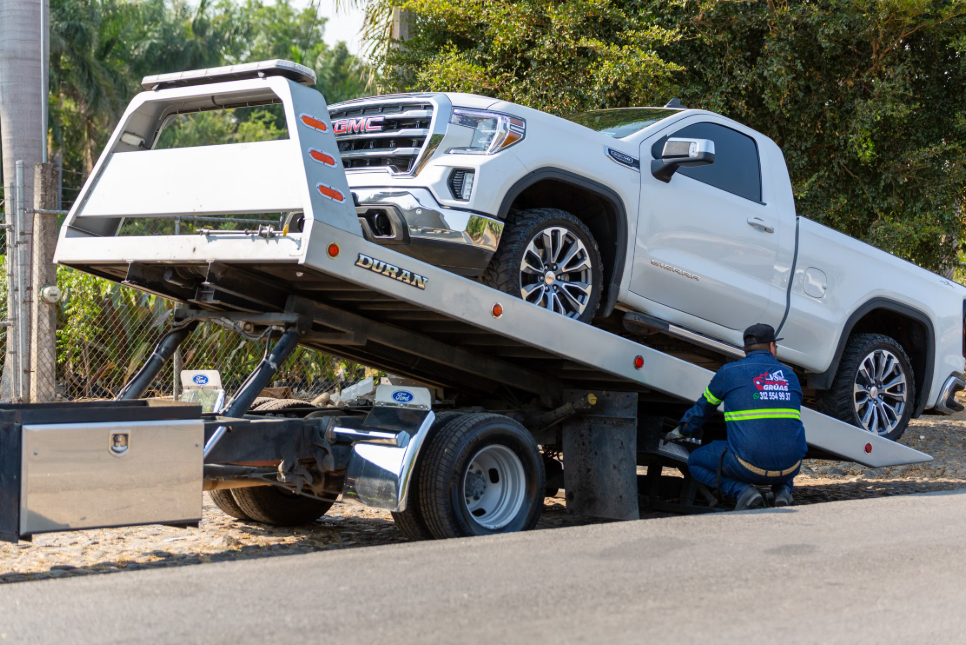

Every business that runs commercial vehicles eventually meets the same morning. A driver calls in, the truck will not move, and a day that was fully planned starts falling apart in real time. Deliveries slip, a crew stands idle at a site, and someone in the office begins the uncomfortable work of telling customers that the schedule has changed. The breakdown itself is rarely the highest cost. The higher cost is everything that stalls behind it while the business works out what to do next. Companies that come through these days well are not lucky. They have decided in advance how they will respond, and that decision is what keeps the rest of the operation moving.
Why One Disabled Truck Costs More Than It Looks
Commercial vehicles spend their working lives under heavy load, and even the best-maintained ones eventually stop where they stand. The moment that happens, what a business actually needs is emergency dispatch that answers at any hour of the day or night, and the common problem is that nobody thinks about it until a driver is already standing at the roadside with a full trailer behind him. A round-the-clock recovery service, staffed and equipped for large vehicles, is what closes that gap. For operators who cannot afford to lose a shift waiting until morning, Geyers Towing provides 24/7 heavy-duty emergency dispatch, which means the call is answered and help is assigned while the rest of the day can still be saved.
The Value of a Response Plan Prepared in Advance
A plan written during a crisis is never as good as one written on a quiet afternoon. Decide now who a driver contacts first, who has authority to approve the spending that follows, and where a disabled vehicle should be taken for repair. Put those details somewhere every driver can reach them without hunting through email, whether that is a card in the cab or a single page saved on the phone. Make sure at least two people in the office know the plan, because breakdowns do not wait for the one person who understands the process to be at their desk.
Driver Safety in the First Few Minutes
Before anything else is considered, the person in the vehicle has to be safe. A large truck stopped on a busy road is a hazard to everyone around it, and the first few minutes are when most of the risk lies. Drivers should know to move as far off the traveled lane as conditions allow, switch on hazard lights, set out warning devices at a sensible distance, and stay clear of moving traffic while they wait. Companies help by training for this rather than assuming it is obvious, and by making it clear that no load matters more than the person carrying it. A driver who feels rushed into standing beside a live lane to inspect an engine is a driver at real risk.
Looking After the Load While It Waits
Cargo does not stop being your responsibility because the vehicle stopped moving. Temperature-sensitive goods, high-value freight, and anything a customer is waiting on all need a decision quickly. Work out whether the load can stay with the vehicle, whether it needs to be transferred, and who is going to authorize that. If the goods belong to a client, tell them early rather than after the fact, because clients forgive delays far more readily than they forgive silence. Keep a note of the condition of the load before and after any transfer, since that record settles disputes that would otherwise turn into arguments weeks later.
Honest Updates Keep Customers on Your Side
The instinct during a delay is to say nothing until there is good news. That instinct costs businesses more relationships than the delay ever does. Contact the affected customers as soon as you know the situation, give them a realistic picture rather than an optimistic one, and update them again when something changes. If a promised delivery cannot happen, offer the next best option instead of leaving them to work it out. Most customers understand that vehicles fail. What they remember is whether you treated them like a partner or left them guessing.
Maintenance Habits That Cut Down Surprise Failures
Most roadside failures announce themselves before they happen. A warning light that keeps returning, a slow leak, brakes that feel different, tires wearing unevenly: these are the early signals that crews notice first and report last. Build a routine where drivers can flag small concerns without feeling they are creating work for someone, and make sure those reports actually reach the person who schedules repairs. Keep servicing on a calendar rather than on memory, and treat a deferred repair as a decision with consequences rather than a saving. Planned downtime is always cheaper than the unplanned kind.
Paperwork That Helps You Later
In the middle of a bad day, documentation feels like the least useful thing anyone could ask for. It becomes the most useful thing a month later. Record the time the vehicle stopped, where it was, what the driver observed, what was decided, who approved it, and what it cost. Photographs take seconds and answer questions that memory cannot. This record supports insurance claims, settles customer disputes, and gives you a clear picture of which vehicles are quietly draining the business.
Steady Operations Through an Unsteady Day
Business continuity is not a document filed away somewhere. It is the accumulated result of decisions made before they were urgent: drivers who know the first three steps, an office that knows who approves what, customers who hear from you early, and vehicles that get serviced when they should. None of it stops a truck from failing. All of it decides how much that failure costs. Handled well, a day that began with a disabled vehicle ends as an inconvenience the business absorbed, and the work carries on largely as planned.
→ Find related stories and features here.
There is no ads to display, Please add some